
Lois Jamang
Exploring academic procrastination and perfectionism for medical students through visual art-based experiences
 Lois Soyā is an emerging Art Therapist with a background in Psychology and Wellbeing in Education. Becoming an art therapist has been a lifelong dream, shaped by her relationship with art, culture, storytelling, and the people whose stories she has been privileged to witness. A Tangkhul Naga woman from Northeast India, Lois grew up within a culture where textiles, singing and weaving have long carried stories across generations. This taught her that stories do not always need to be spoken. They could also be sung, woven, drawn and held in our hands. She sees her journey into art therapy as, in some small way, carrying this legacy forward.
Before becoming an art therapist, Lois worked closely with Indigenous youth and women from Adivasi communities affected by caste-based discrimination, as well as Naga communities shaped by generations of political unrest. These experiences influenced her understanding of how culture, history and community become intertwined with individual stories. This continues to inspire her interest in socio-cultural trauma, perfectionism, self-compassion and resilience.
Growing up between the worlds of art and medicine, Lois Soyā became curious about the space where the two meet. Her research wonders what becomes possible when the world of medicine is given permission to play. Lois found the paradoxical interplay between perfectionism and procrastination fascinating. This made her curious about the effectiveness of visual art-based material in promoting self-compassion among medical students. Rather than aiming to solve the complex issue of maladaptive perfectionism in relation to academic procrastination, the primary goal was to explore the “why” behind the notions that equate imperfection with failure.
Across her research work, Lois encouraged the imperfection of making by hand. Threads of breaking, mending, weaving, carrying and becoming move throughout her pieces. She hopes this encourages students to embrace all parts of themselves, seeing no part as “bad,” but perhaps simply unexplored.
Lois is a pilgrim of different places, people and ways of knowing. So, these art pieces are not conclusions, but traces of that journey. These things broken and repaired, threads inherited from others, and pieces she will continue to carry as she finds her own way as a culturally informed art therapist.
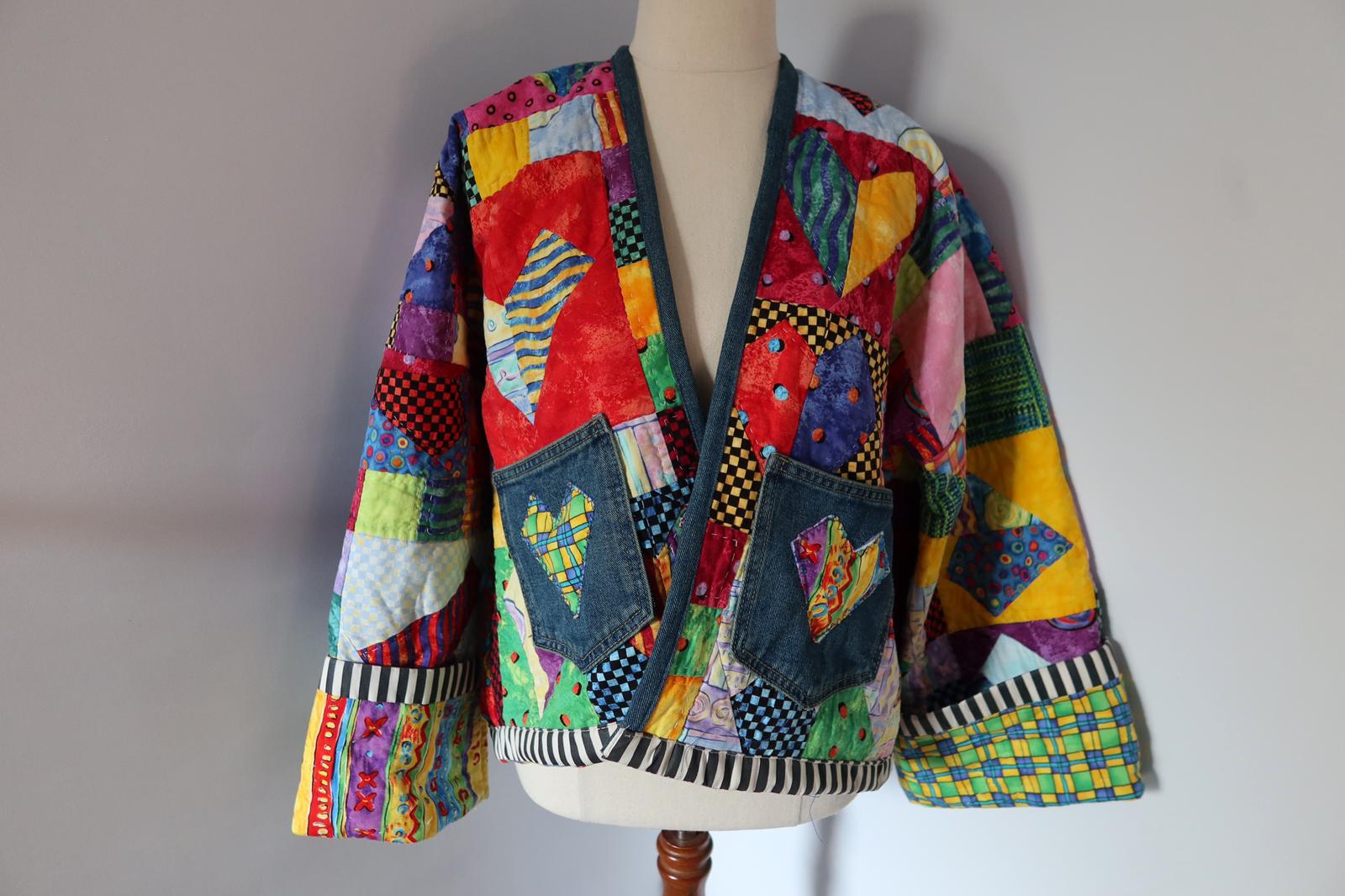
Textile, quilt and repurposed denim
I lost my supervisor in the midst of my research journey in 2024. Though our time together ended too soon, the threads of her wisdom remained woven into my work. This jacket is my hug to her, a way of carrying her folded heart forward with mine.

Tissue paper, clay and pearls on canvas
30.5 x 30.5 cm
With a new guide beside me, the world was my oyster. Yet, I looked into these unfamiliar waters with caution, drawn to what might be waiting beneath the surface. What might I find if I let myself swim again?
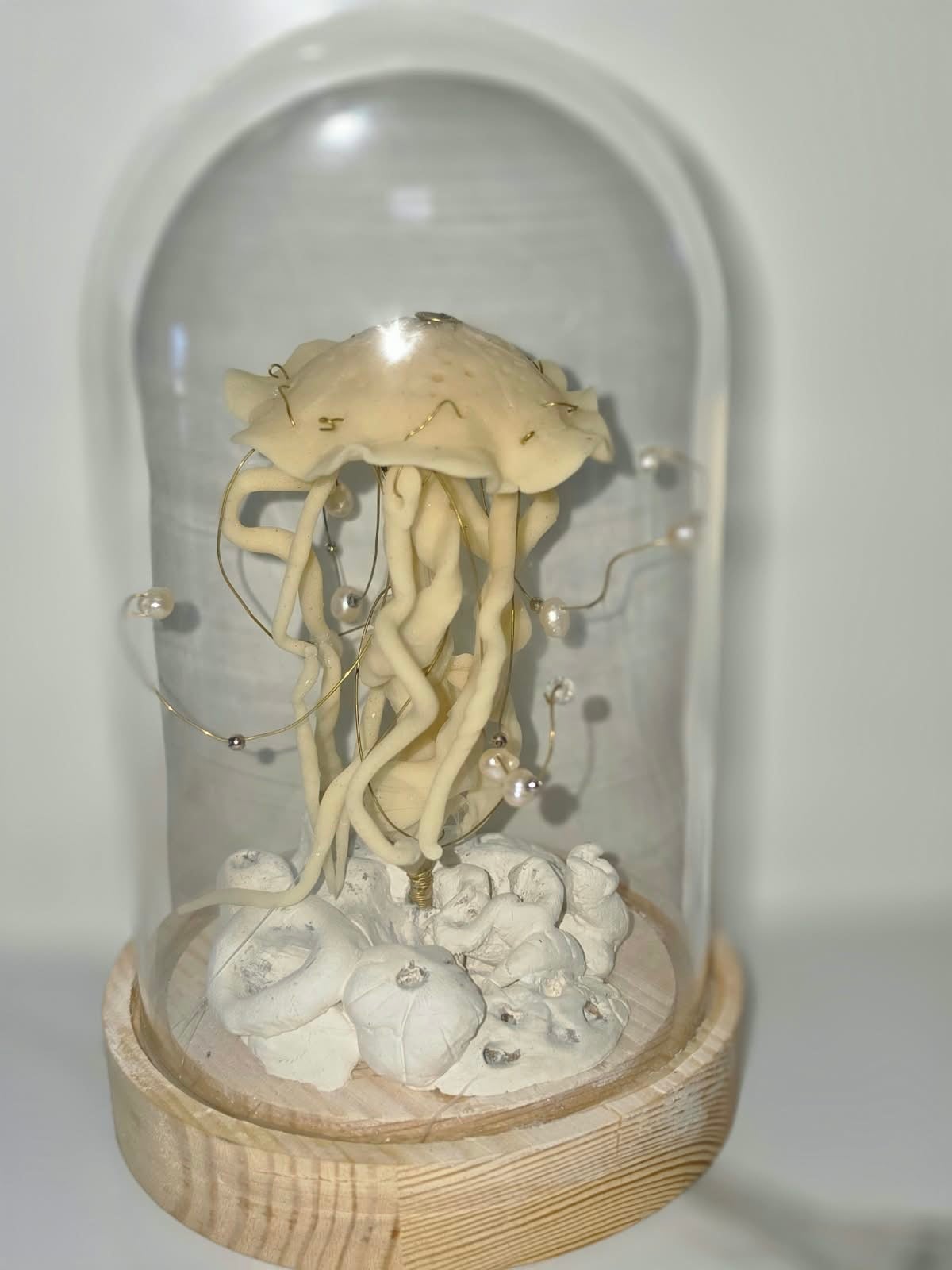
12.5 x 18 cm
Glow-in-the-dark clay, wire, and pearls.
As I waited, I resonated with the curious jellyfish, transparent and vulnerable, drifting through the research process slower than I imagined. Will I be okay? I kept asking the deep ocean.

30.5 x 30.5 cm
Acrylic and oil pastels on canvas
Seven rounds of ethics revisions began to feel like seven failures. The frustration and vulnerability of being seen while progress felt slow confronted me with the very perfectionism I was researching.
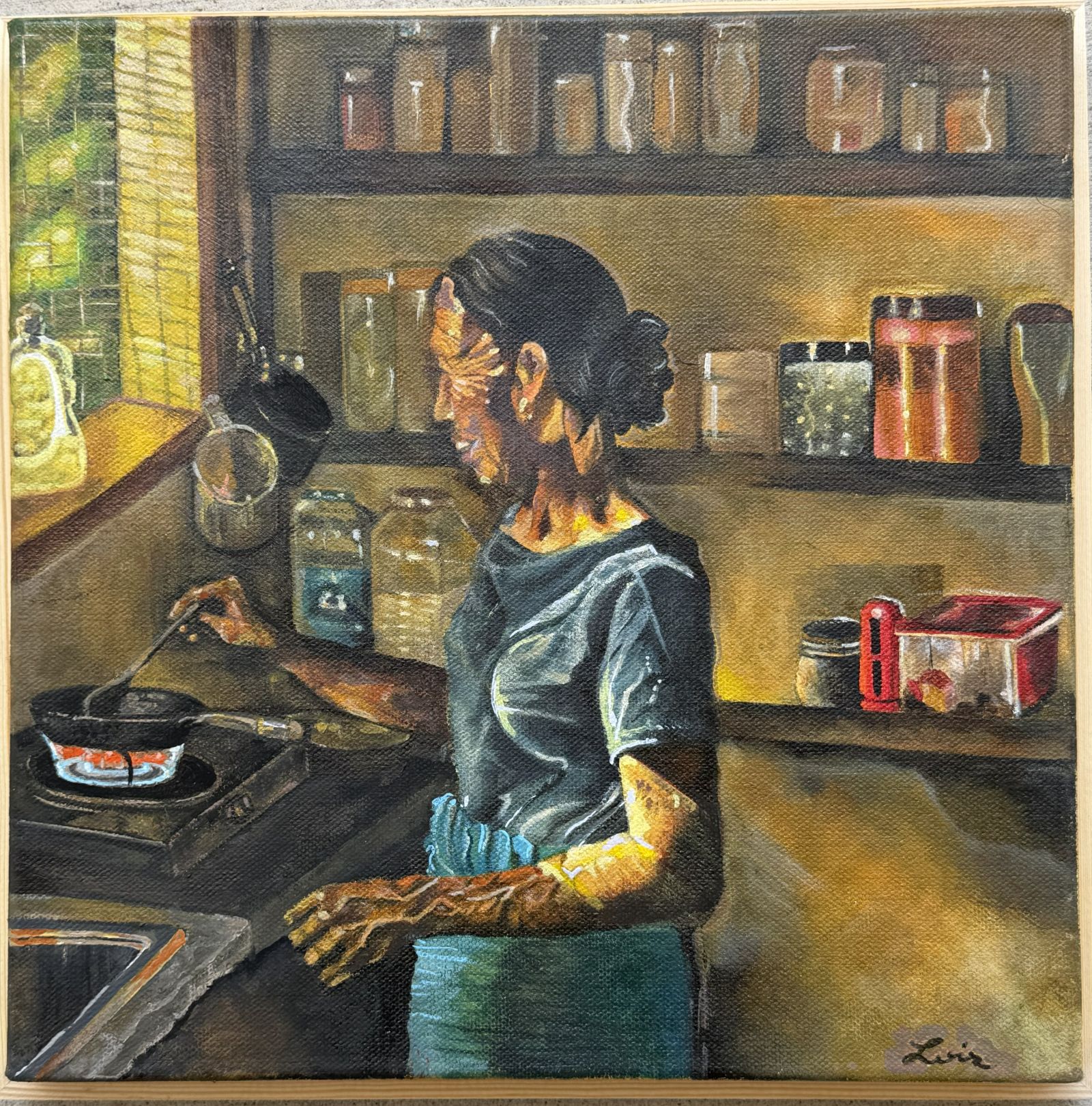
Acrylic on canvas
30.5 x 30.5 cm
Ayi means grandmother in Tangkhul. I painted my grandma alongside my research, from its beginning to its end. Returning to her grounded me, yet perfectionism kept the painting unfinished. As I explored procrastination and perfectionism in others, I began recognising them in myself. As the research ended, so did this painting.

Felt, gold wire and repurposed denim
30.5 x 30.5 cm
The Japanese philosophy of wabi-sabi, finding beauty in the imperfect, impermanent and incomplete, became a meaningful part of my research. This piece honours the women who shaped my research, past, present and ongoing, each part of my own imperfectly unfolding journey.